
How to Read Orange County Price Bands Before You Make an Offer
Price is never just price in Orange County. Two homes can sit minutes apart, share a similar square footage, and still trade in completely different value ranges because buyers are reacting to school boundaries, neighborhood reputation, lot utility, remodel quality, and even the feel of the street. If you are preparing to make an offer, understanding price bands helps you see where a listing truly sits in the market instead of relying on a single asking number.
Think of a price band as the bracket where buyers mentally compare one property against another. A home listed at $1,195,000 is not just “around $1.2 million.” It may be competing with homes below a psychological threshold for buyers capped at $1.2 million, while also attracting shoppers stretching down from higher budgets if inventory is tight. That subtle positioning matters. In a market with as many micro-neighborhoods as Orange County, these thresholds can shape traffic, urgency, and offer strength almost immediately.
Start with the search behavior, not the sales pitch. Most buyers search in clean ranges: under $800,000, $800,000 to $1 million, $1 million to $1.25 million, and so on. Sellers and listing agents know this, which is why homes are often priced just below a round number. When you review a listing, ask yourself which pool of buyers it is trying to attract. A home priced at $999,000 may be signaling “entry to the next tier,” while one at $1,025,000 may be saying, “we already know our upgrades justify crossing the line.”
The next step is to study what buyers get at each level. In Orange County, price bands can reflect dramatic changes in lifestyle. One bracket may offer a condo with resort-style amenities and close access to dining and employment centers. The next may open the door to a detached home with a yard, better privacy, or stronger school assignment. Move up again, and buyers may expect gated communities, larger lots, newer construction, or more polished design finishes. You are not simply paying for square footage; you are paying for a bundle of convenience, status, condition, and future resale appeal.
What Actually Pushes a Home Into a Higher Band?
A useful way to read a listing is to separate the factors that are expensive to change from the ones that are cosmetic. Location within the community is usually the biggest divider. Corner lots, cul-de-sac placement, hillside views, walkability to parks, and lower traffic exposure can all bump a property upward. So can highly regarded schools, especially in a family-driven market where educational options heavily influence demand. These are value drivers that buyers cannot easily renovate into existence later.
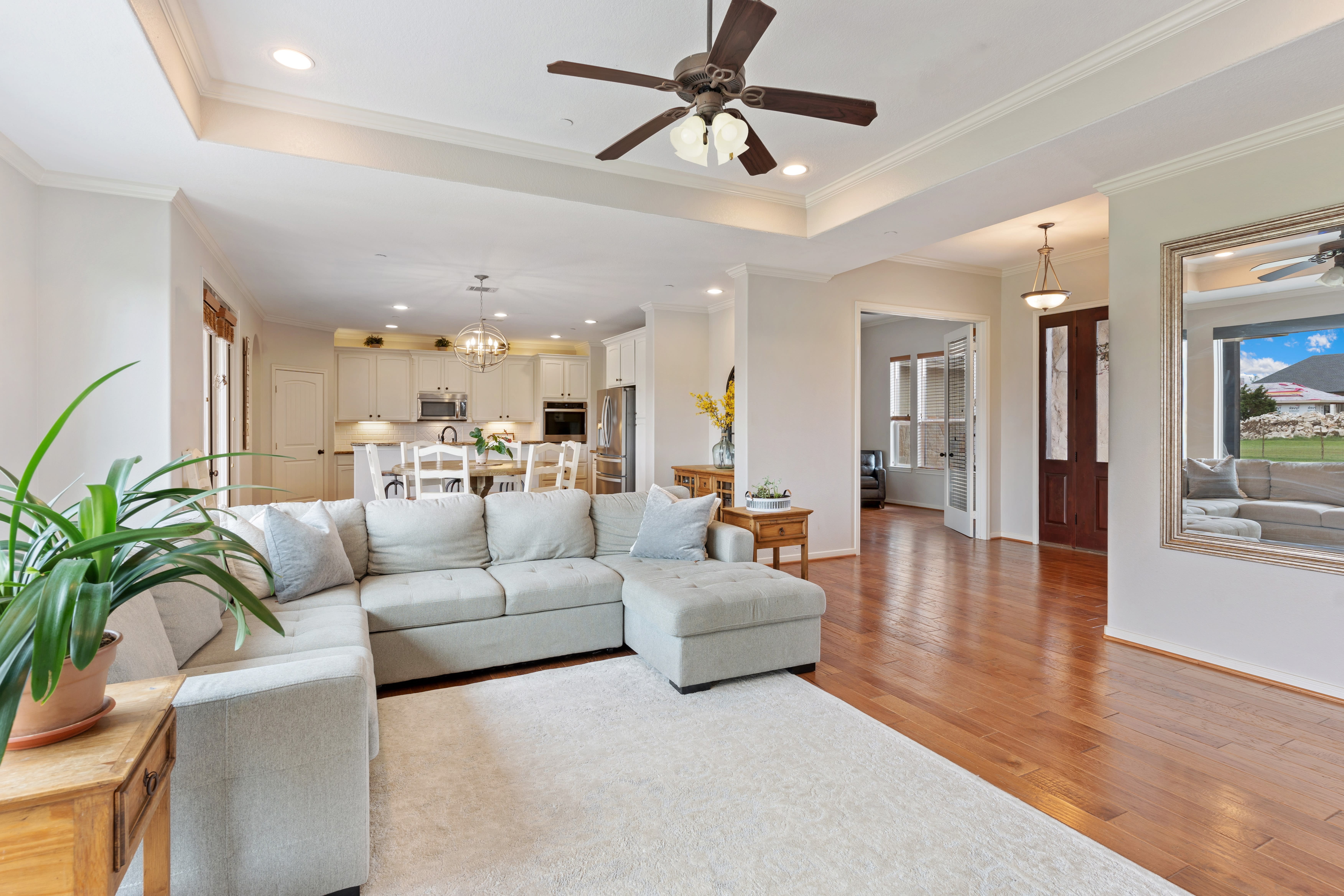
Condition comes next. A property with an updated kitchen, newer systems, modern flooring, and remodeled baths often enters a stronger band because buyers are willing to pay for convenience. In higher-cost counties, many people prefer certainty over projects. A move-in-ready home saves time, reduces renovation risk, and feels easier to finance emotionally and financially. On the other hand, if a listing is priced in a renovated band but still needs major work, that mismatch can create hesitation and longer market time.
Lot usability is another major clue. In some Orange County neighborhoods, outdoor living space is a premium feature. A modestly larger yard, a comfortable patio, a pool, or simply better privacy can push a home into a more competitive bracket. Buyers often react strongly to spaces that support everyday California living: indoor-outdoor flow, room for entertaining, and settings that feel tucked away rather than tightly packed.
That is why reading price bands well means comparing homes by buyer experience, not just by data columns. If one property has the same bedroom count as another but lives better, looks brighter, or sits on a much more appealing street, the higher price band may be justified. If the only reason for the premium is optimistic pricing, you may have more negotiating room than the list price suggests.
How Buyers Can Use Bands to Build a Smarter Offer
Before writing an offer, review recent comparable sales in the same band and just below it. This helps answer the real question: does the listing deserve to sit where it is, or is it reaching? A home near the bottom of a desirable band can generate multiple offers because it feels accessible. A home at the top of a band must usually prove itself with superior condition, location, or features. If it does not, buyers should be careful not to overreact to presentation alone.
It also helps to look at active competition. If several similar homes are available in the same price range, buyers gain leverage. If inventory is thin and the subject property is one of the few credible options in its bracket, speed and cleaner terms matter more. Orange County can reward decisiveness, but it also rewards preparation. Understanding the band keeps you from writing an emotional offer based on fear instead of evidence.
Financing matters here too. Monthly payment changes can move buyers in or out of a band more quickly than expected, especially when rates shift. A small jump in price may not feel dramatic on paper, but after taxes, insurance, HOA fees, and rate impact, it can shrink the buyer pool. That is why some homes stall above a threshold while others gain momentum just under it. Smart buyers pay attention to both list price psychology and payment reality.
Local Guidance Makes the Numbers More Useful
Price bands are most powerful when paired with neighborhood-level insight. A national portal can show you similar prices, but it cannot always tell you why one tract consistently outperforms another, why one school boundary creates stronger competition, or why a remodel in one area brings a better return than the same remodel somewhere else. That local reading is where experienced representation becomes especially valuable.
With more than 18 years in residential real estate, Donna Reid of Regency Real Estate helps buyers interpret not only what a home costs, but what it means in context. That includes spotting overpricing, recognizing hidden value, and understanding when a property is likely to attract aggressive competition. In a county where pricing can shift block by block, practical local guidance can save buyers from both overbidding and missing strong opportunities.
Ultimately, the goal is simple: make an offer that is competitive, informed, and aligned with the market band the home truly belongs in. When you understand how Orange County buyers think, how listings are positioned, and what features create real separation, you can move with much more confidence. And in a fast-moving market, confidence backed by strategy is often what wins.